
Forestry Mulching
Forestry mulching grinds brush and small trees into a mulch layer right where they stand. One machine, one pass, and no burn piles left behind.
View Details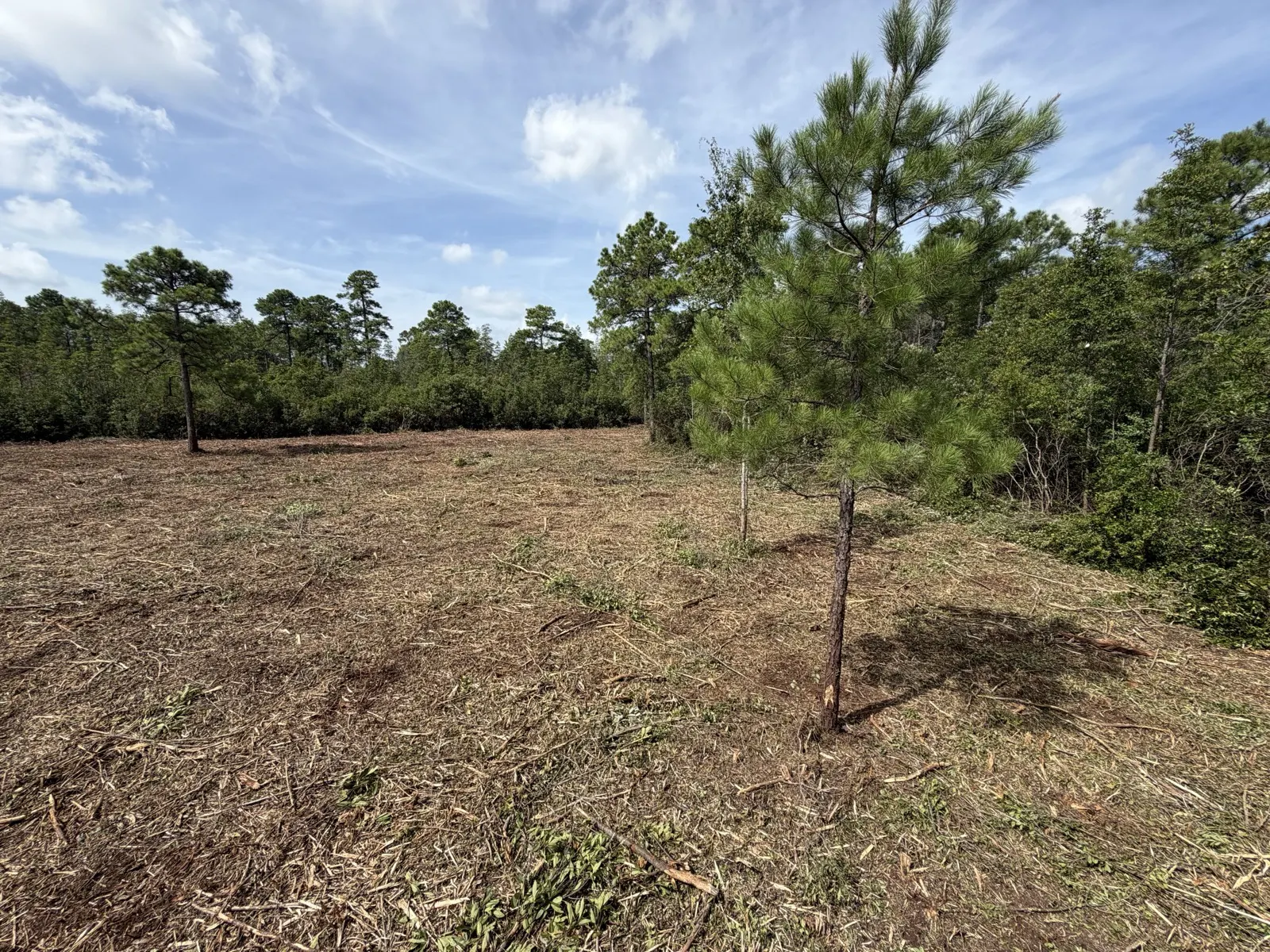
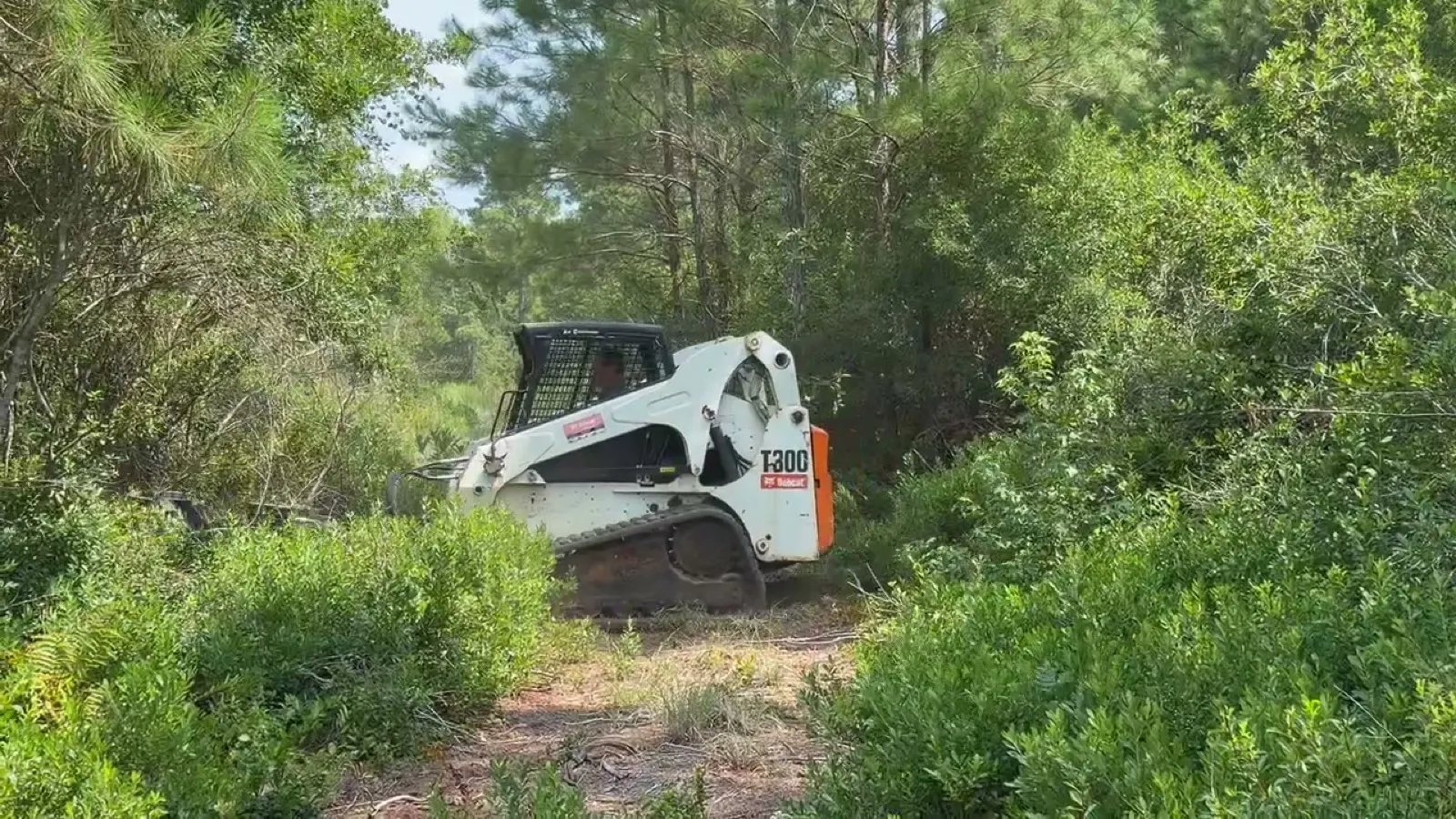
Pasture reclamation is the work of bringing a lost field back from years of brush. We work out of Longs, SC, across the farm country of inland Horry and Columbus counties. Out here you find old tobacco ground, row-crop fields, cattle and horse places, and hunting tracts. Leave any of it alone a few seasons and briar, sweetgum, wax myrtle and volunteer pine take it. Pasture reclamation puts that ground back where a mower can handle it. We mulch the growth in place with a Bobcat T300 and a forestry mulcher head.
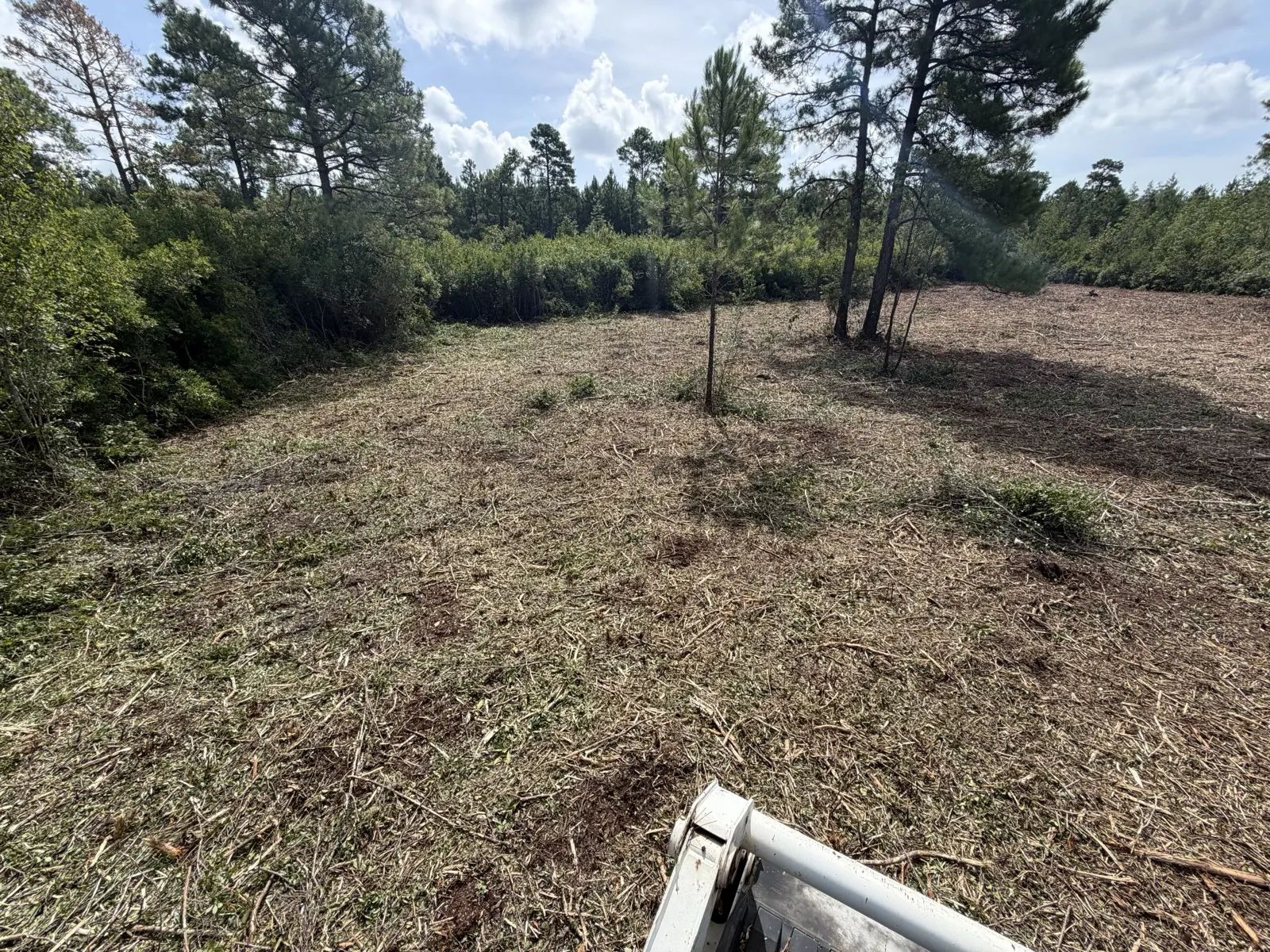
An overgrown pasture does not have to be pushed into a burn pile. The mulcher grinds the briars and saplings where they stand, and what comes off stays put. That mulch layer breaks down into the sandy soil and feeds it back. Nothing gets burned or hauled away, and the topsoil stays where it belongs. Pasture clearing this way leaves you a field you can mow. It is one machine and one operator, owner-operated on every job. Grown-in fence lines and gates fall under our Fence Line and Access Lane Clearing.
Tell us about your land — we’ll get right back to you.
Every job starts with a look at the field. We come out, see what is growing, and check how wet the low ground stays. Briar and wax myrtle mulch fast, so those acres move quick. Sweetgum and pine volunteers take longer, and thicker stems slow the machine down. Acres matter, but thickness matters more. The mix of growth is what sets the hours on the job. The estimate is free, and it comes after we see the field.
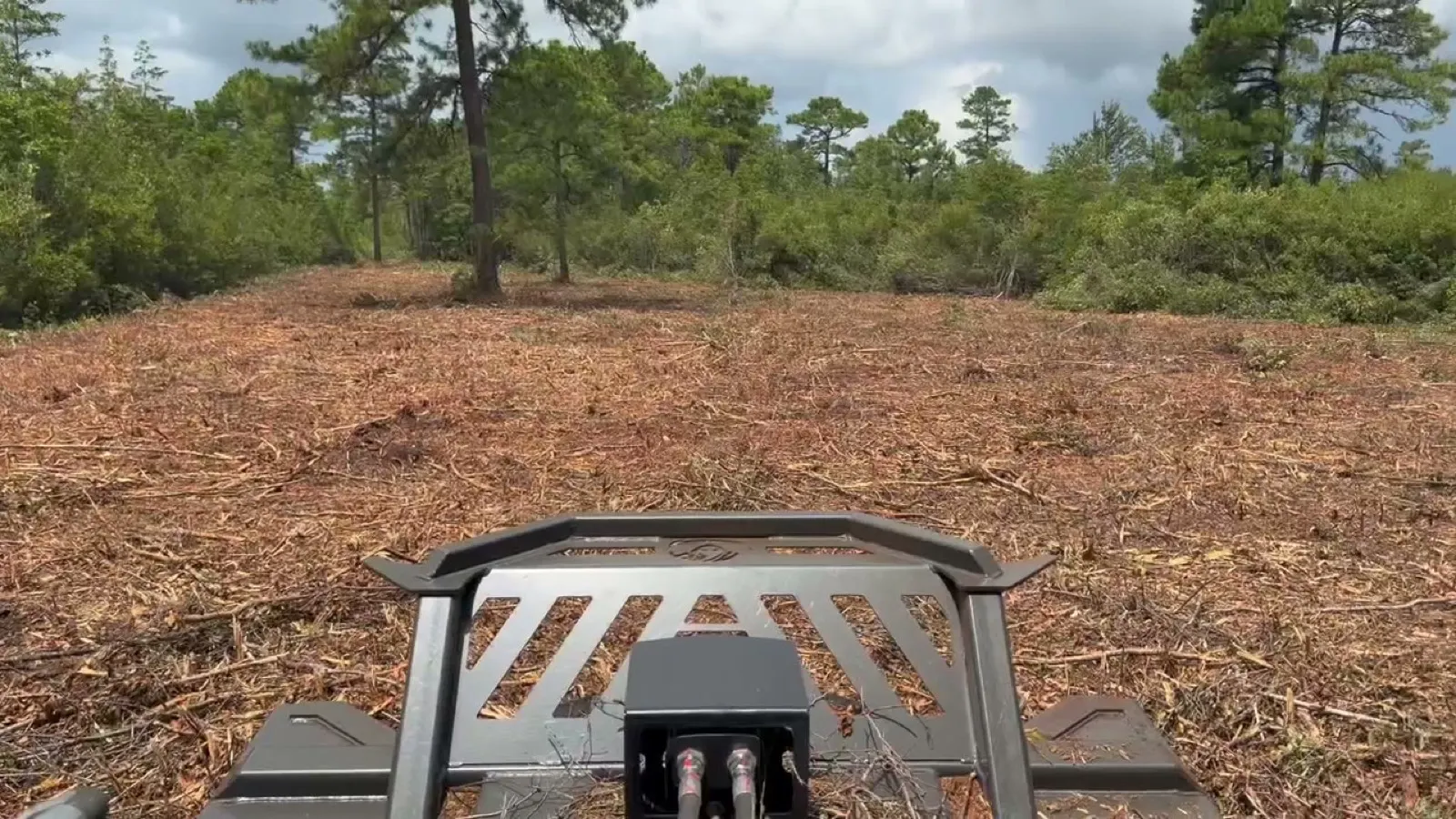
Then the Bobcat T300 goes to work with the mulcher head. It cuts the growth down and grinds it where it stands. We take the field in passes, and the brush turns into chips. On thick ground we make a rough pass first, then come back lower. The second pass leaves a field a mower can follow. How low we cut depends on what you plan to run over it. It is the same method as our Forestry Mulching work, aimed at old fields.
This is coastal plain ground, flat and sandy, with the water table sitting close. Hot, wet summers and a long growing season push everything hard. Nobody plans to lose a field, it just gets away from you. One summer without mowing and a pasture looks rough by fall. Two or three years and it is briar and knee-high sweetgum. Five years and the pine volunteers are thick as your wrist. That is why overgrown property cleanup around here is more than a mowing job.
Wet ground matters as much as the growth. Low spots in these fields hold water long after a rain. Heavy equipment on soft ground leaves ruts you have to live with. A tracked machine spreads its weight out and rides softer. The T300 is a compact track loader, so it stays lighter on the field. We work the wet parts when they will carry the machine. That is how a field comes back without getting torn up.
Most people want the same thing, open ground they can use again. Cattle and horses get their grazing back once the brush is off. Hunters get plots and shooting lanes back where the thicket was. For hay ground, field reclamation is the first step before anyone cuts it. We do not disc or seed, and we do not do dirt work. Our part is taking the growth off and leaving the field open. What you run or plant on it after is your call.
The mulch layer left behind breaks down into the soil over the seasons. Grass and whatever seed is already in that ground comes back through it. Keeping the field open after that is easier than getting it back. A mower once or twice a year holds it. That is what our Bush Hogging service is for. Let a reclaimed field sit another five years and you start over. Cutting it keeps the work you paid for.
Free, no-obligation estimates across the Grand Strand, both sides of the SC/NC line.
(843) 385-1090From the first call to the last pass of the mulcher, here is exactly how it goes.
Tell us where the property is and what you want the ground to do. You reach the operator, not a call center.
We come out, look at the growth and the ground, and talk through what the job takes. The estimate is free and it is a real number.
The Bobcat T300 grinds brush and small trees into chips where they stand. No burn piles, nothing hauled off your land.
Clean, walkable ground with a mulch layer over it. Ready to mow, plan on, fence, or just look at without the overgrowth.
Common questions about pasture reclamation across the Grand Strand, both sides of the SC/NC line. Don't see yours? Give us a call — we're happy to help.
Forestry mulching grinds brush and small trees into a mulch layer right where they stand. One machine, one pass, and no burn piles left behind.
View Details Heavy bush hogging for fields and pastures that got away from you. A tracked machine with a mulcher head cuts what a tractor bush hog cannot.
View Details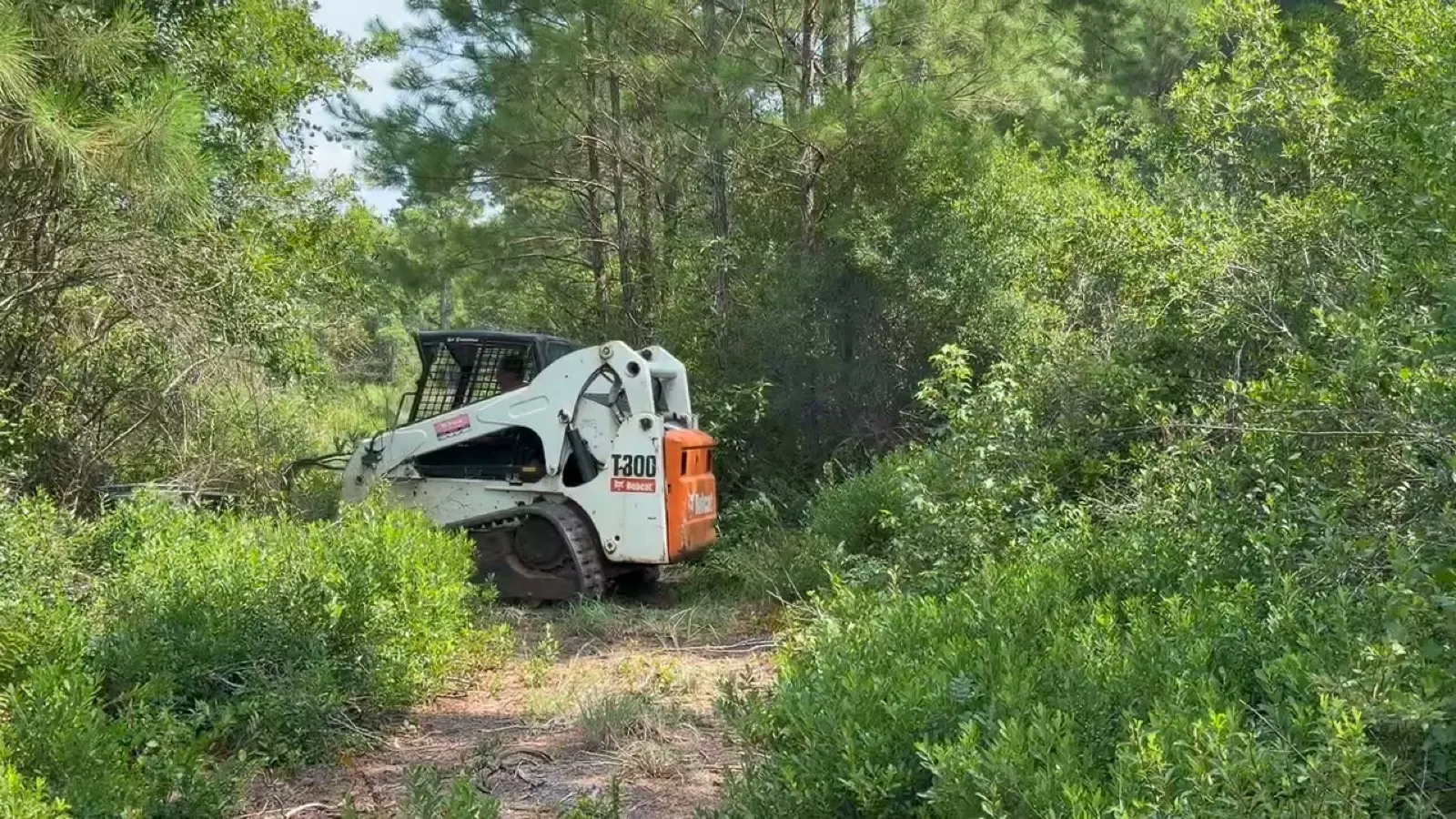
Thick undergrowth, briar and vines cleared off yard edges, wood lines and the understory under standing trees. Ground into mulch on site with a forestry mulcher.
View Details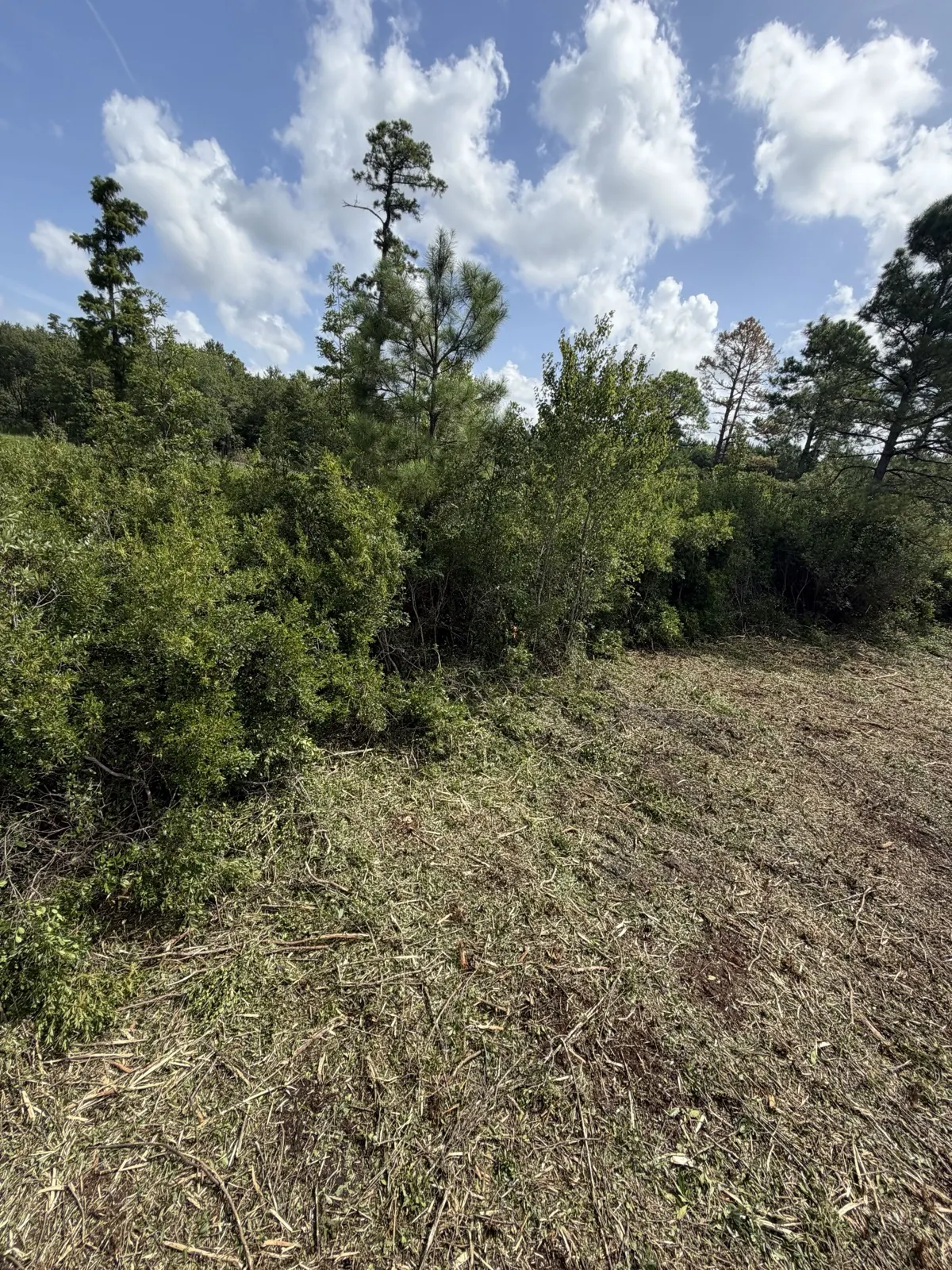
Lot clearing for single residential and small commercial lots. We mulch brush and small trees in place, so your lot stays clean and usable.
View Details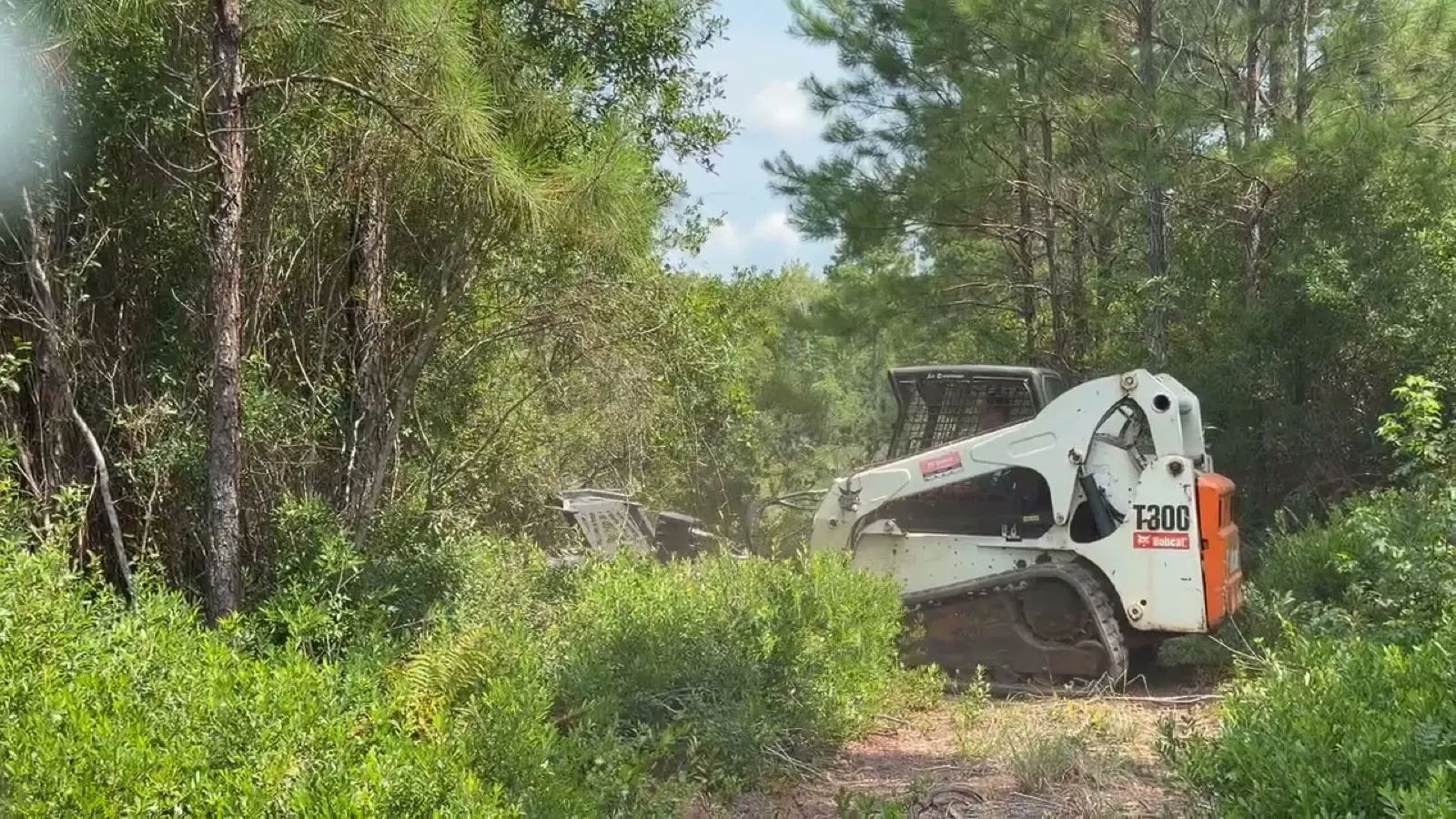
We mulch the growth off overgrown fence lines and private lanes. One tracked machine, owner-operated, out of Longs, SC and the farm country around it.
View DetailsA husband-and-wife business based in Longs. The person who prices your job is the person on the machine, and the phone reaches the operator every time.
The forestry mulcher grinds growth into chips where it stands. No burn piles to permit and watch, no dump trucks, and the ground cover stays on your land.
We look at the property before we price it. You get a real number for the job as it stands, before any work starts, and the estimate costs you nothing.
A tracked machine on flat, sandy coastal plain with a high water table. It rides where wheels sink, and we work both sides of the SC/NC line.
An overgrown lot, a field that got away from you, a fence line you can't see anymore? Call or send the form. We come look at the property, talk through what you want the ground to do, and price the job before any work starts. Estimates are free.
Tell us about your land — we’ll get right back to you.